5 Simple Steps to Build Garden Benches
The scent of fresh-cut cedar announces itself before you even see the wood. Your fingers brush rough lumber destined for transformation into a garden seat framed by lavender and climbing roses. Learning the steps to build garden benches requires understanding material science, joinery principles, and site preparation as rigorously as any propagation protocol. Each decision affects longevity, structural integrity, and how your bench weathers through freeze-thaw cycles and summer heat.
Materials
Select lumber based on durability ratings and tannin content. Western red cedar (Thuja plicata) offers natural rot resistance from thujaplicin compounds, requiring no chemical treatment. White oak (Quercus alba) provides hardness rating of 1360 on the Janka scale but demands pre-drilling to prevent splitting. Avoid pressure-treated pine in edible gardens; copper azole leachate alters soil pH by 0.3 to 0.7 units within a 12-inch radius.
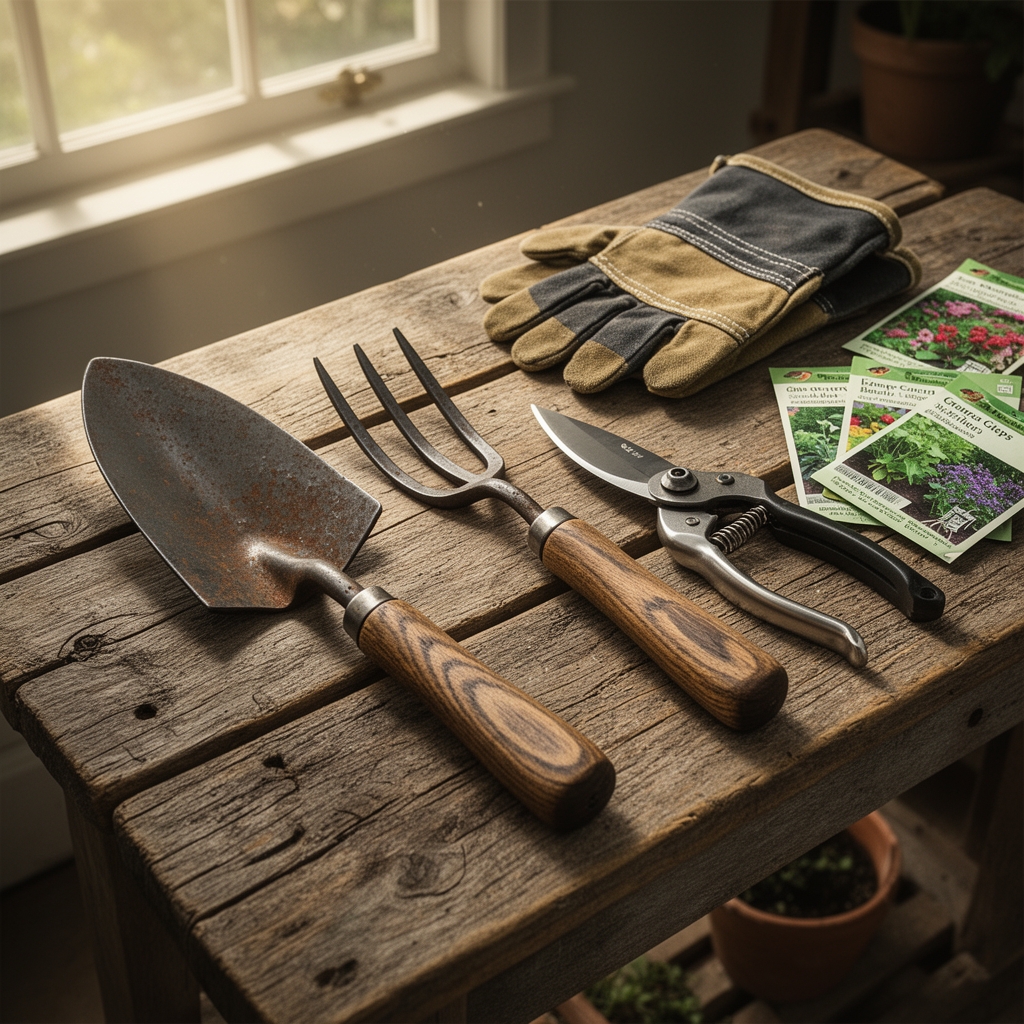
Hardware requirements include:
- Galvanized deck screws (3-inch for frame, 2.5-inch for slats)
- Exterior wood glue with 3500 PSI shear strength
- Carriage bolts (3/8-inch diameter, 4-inch length for leg assemblies)
- Tung oil or linseed oil finish (12-16% solids content)
For ground contact points, apply copper naphthenate preservative at 2% concentration. This prevents basidiomycete fungi colonization without affecting adjacent soil cation exchange capacity. Keep a soil pH test kit nearby; cedar tannins release slowly and may lower substrate pH by 0.2 units annually within a 6-inch zone.
Timing
Execute construction during low-humidity periods when wood moisture content measures below 15% on a pin-type meter. In USDA Hardiness Zones 5-7, optimal building windows span late May through September. Zones 8-10 offer year-round construction feasibility, but avoid monsoon seasons when relative humidity exceeds 70% for consecutive days.
Lumber acclimation matters. Store boards horizontally with 1-inch spacers in covered outdoor areas for 14 days minimum before cutting. This equilibrates moisture content with ambient conditions, preventing joint failure from dimensional lumber movement. Spring-harvested wood contains higher sap concentrations; autumn-cut lumber offers 8-12% better dimensional stability.
Phases

Foundation Preparation
Excavate four post locations 18 inches deep, diameter 10 inches. Install drainage layer using 4 inches of crushed granite (3/8-inch minus). Tamp to 95% compaction using a hand tamper calibrated to 40 pounds per square inch. Pour concrete footings extending 2 inches above grade to prevent wicking. Embed galvanized post anchors while concrete reaches initial set at 45-60 minutes.
Pro-Tip: Add 2 tablespoons of hydrated lime per footing to raise concrete pH to 12.5. This creates an alkaline barrier inhibiting wood-decaying fungi at the critical soil-wood interface.
Frame Assembly
Cut four legs at 18 inches (finished seat height 17 inches after slab attachment). Rip two support rails at 3.5 inches wide, length matching desired bench span minus 3 inches for end clearance. Pre-drill pilot holes at 70% of screw shank diameter to prevent grain separation. Apply wood glue to joint faces before driving screws; this doubles shear strength to 650 pounds per linear foot.
Secure cross-bracing at 45-degree angles between legs using half-lap joints. Calculate brace length by multiplying leg spacing by 1.414 (the square root of 2). This triangulation distributes dynamic loading across the frame, essential when bench supports 400+ pounds.
Pro-Tip: Orient annual growth rings bark-side up on seat slats. Cupping behavior follows ring orientation; this configuration sheds water rather than creating puddles.
Surface Treatment
Sand all touchable surfaces progressing through 80, 120, then 180-grit aluminum oxide paper. Remove dust with tack cloth damped with mineral spirits. Apply tung oil in three coats, 24 hours between applications. First coat penetrates 1/16 inch; subsequent coats build surface film to 0.002-inch thickness. This regimen achieves water bead contact angle of 95 degrees while allowing vapor transmission to prevent subsurface moisture accumulation.
Pro-Tip: Add 10% citrus solvent to final oil coat. This increases penetration depth by 30% and accelerates polymerization through limonene catalysis.
Troubleshooting
Symptom: Longitudinal cracks in seat slats within first season
Solution: Wood dried too rapidly or moisture content exceeded 18% at assembly. Fill cracks with sawdust-epoxy mixture (60:40 ratio by volume). Reapply oil finish monthly for three months to stabilize moisture exchange rate.
Symptom: Black spotting on cedar surfaces
Solution: Mildew colonization from Aureobasidium pullulans. Scrub with solution of 1 part household bleach to 3 parts water. Rinse thoroughly. Recoat with oil containing 2% zinc naphthenate as mildewcide.
Symptom: Joint loosening after winter
Solution: Freeze-thaw cycling caused fastener withdrawal. Drill adjacent pilot holes 2 inches from originals. Install screws 1/4 inch longer than originals. Add exterior-grade construction adhesive rated to -20°F.
Symptom: Sapwood separation in oak components
Solution: Inadequate seasoning allowed residual tension wood stress. Replace affected members with quartersawn stock showing growth rings at 60-90 degrees to face. This orientation exhibits 50% less tangential movement.
Maintenance
Apply oil finish annually each spring when daytime temperatures stabilize above 55°F. Surface requires 1 fluid ounce per 4 square feet. Inspect fasteners biannually, retightening to 15 inch-pounds of torque using a calibrated driver. Clean debris from joinery gaps monthly using a natural-bristle bench brush; accumulated organic matter retains moisture and initiates decay.
Power-wash only when necessary, maintaining 18-inch nozzle distance at 1200 PSI maximum. Closer proximity or higher pressure damages early wood cells, creating rough surfaces that trap moisture. Examine ground contact points each autumn for soft spots indicating incipient rot. Probe with an awl; penetration beyond 1/4 inch requires member replacement.
FAQ
How long do cedar garden benches last untreated?
Sapwood degrades in 8-12 years; heartwood persists 20-30 years depending on moisture exposure and ground contact.
What spacing prevents seat slat warping?
Install slats with 3/8-inch gaps. This allows 12% dimensional movement while maintaining structural support every 3.5 inches.
Can I use reclaimed lumber for garden benches?
Yes, if moisture content measures below 15% and wood shows no soft rot. Remove all embedded metal; hidden fasteners damage saw blades and create rust stains.
Do garden benches need concrete footings?
Required for permanent installations or spans exceeding 5 feet. Portable benches under 4 feet perform adequately on compacted gravel pads 4 inches deep.
What finish works best in coastal environments?
Marine-grade spar varnish with UV inhibitors. Reapply every 18 months; salt air accelerates film degradation through chloride ion penetration.