10 Basic Steps to Use Deer Repellent
Deer browsing destroys thousands of dollars in landscape investment each season, stripping stems, demolishing blooms, and stunting woody growth before homeowners notice the damage. The most effective defense requires understanding the steps to use deer repellent in a systematic rotation that accounts for weather patterns, application intervals, and scent-receptor saturation in cervid populations. A well-timed repellent program protects high-value ornamentals, vegetable crops, and newly established perennials without resorting to exclusion fencing or costly physical barriers.
Materials
Select repellents based on active ingredient chemistry and target application surface. Contact repellents containing putrescent egg solids (typically 40-50% concentration) work through taste aversion and bond to leaf cuticles when pH falls between 6.0 and 7.5. Area repellents using predator urine or blood meal (approximate NPK of 12-0-0) trigger olfactory avoidance and require reapplication every 7-10 days under normal precipitation. Capsaicin-based formulas at 1-2% concentration provide systemic deterrence but degrade rapidly under UV exposure. Combination products pairing egg solids with garlic oil (0.1-0.5% allicin content) offer dual-mode protection. Adjuvants including horticultural spreader-stickers extend residual activity by 3-5 days through improved adhesion to waxy leaf surfaces.
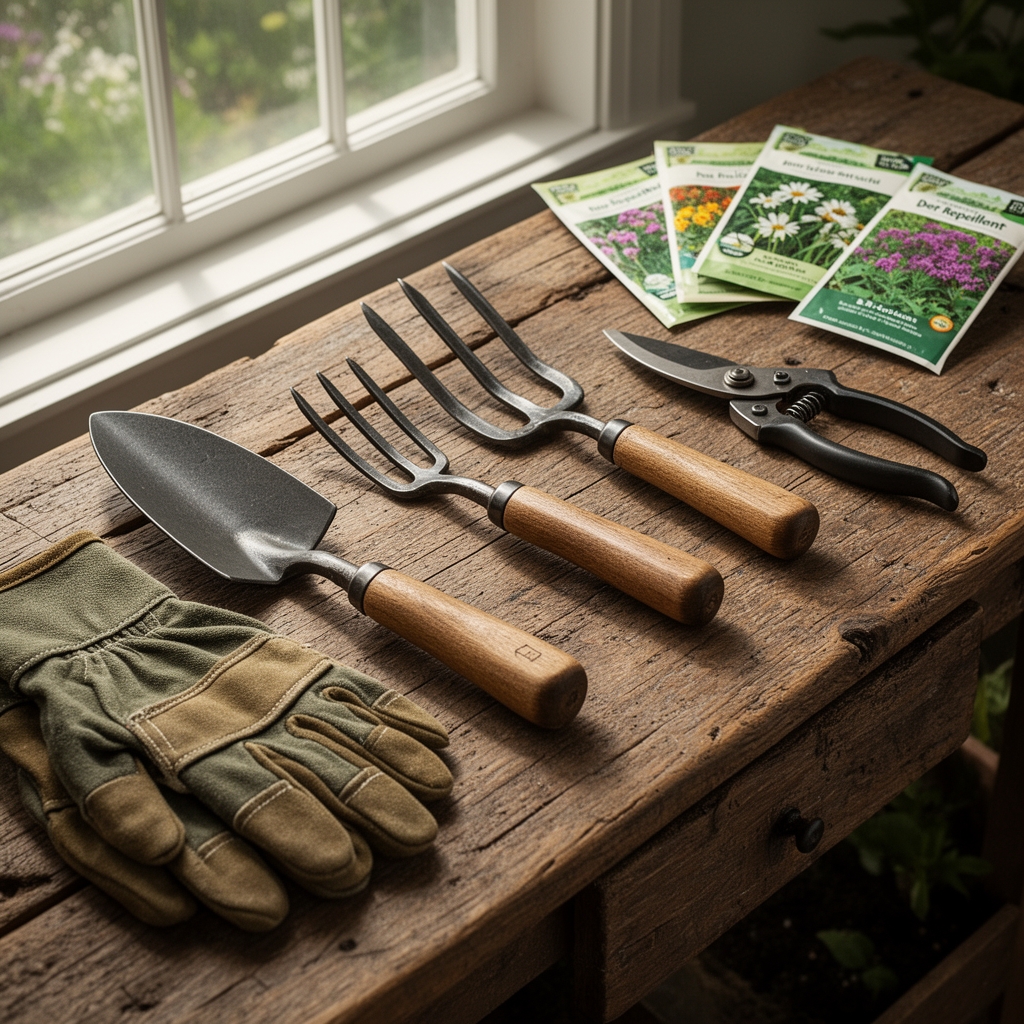
Equipment includes a pump sprayer with adjustable nozzle for foliar application, a granular spreader calibrated to 3 pounds per 1,000 square feet for territory markers, and protective eyewear when handling concentrated formulas. Measure soil pH with a calibrated probe before selecting application timing, as acidity below 5.5 reduces contact repellent efficacy by accelerating breakdown of protein-based active ingredients.
Timing
Begin applications in USDA Hardiness Zones 5-7 two weeks before last average spring frost when deer shift from woody browse to herbaceous growth. In Zones 8-9, start applications in late February as soil temperatures reach 45°F and auxin distribution triggers new shoot emergence. Fall applications commence six weeks before first frost when deer pressure intensifies during pre-rut foraging. Apply repellents during dry conditions with temperatures between 40°F and 75°F to ensure proper adhesion and curing. Avoid application when rain is forecast within 24 hours, as runoff reduces cation exchange capacity at the leaf surface and destroys protective film formation.
Phases
Sowing and Initial Protection
Apply granular repellents in a 12-inch perimeter around seed beds immediately after planting. Incorporate blood meal at 2 pounds per 100 square feet into top 2 inches of soil to create a subsurface scent barrier. Spray emerging seedlings at the two-true-leaf stage with diluted contact repellent (50% of label rate) to condition deer without causing phytotoxicity.
Pro-Tip: Inoculate roots with mycorrhizal fungi (Glomus intraradices) at transplant to accelerate establishment and reduce stress-induced volatiles that attract browsing.

Transplanting Vulnerable Stock
Coat root balls with repellent slurry (3 ounces per gallon of water) before setting transplants. Apply full-strength foliar spray to all leaf surfaces, ensuring coverage on abaxial (lower) sides where deer scent receptors detect chemical signatures. Establish a rotation schedule alternating between egg-based and capsaicin formulas every 14 days to prevent habituation. Install scent stations using fabric pouches filled with 4 ounces of predator urine at cardinal points 15 feet from protected plantings.
Pro-Tip: Prune lateral branches at 45-degree angles rather than flush cuts to minimize wound surface area and reduce stress ethylene that signals vulnerability to browsers.
Establishing Mature Specimens
Maintain applications through first full growing season until woody stems develop lignified bark with tannin concentrations above 3%, deterring browse naturally. Increase spray volume to 2 gallons per 1,000 square feet as canopy expands. Apply trunk wraps treated with capsaicin paste on smooth-barked species (Acer, Betula) vulnerable to antler rubbing during autumn rut.
Pro-Tip: Supplement soil with gypsum at 5 pounds per 100 square feet to improve cation exchange capacity and enhance uptake of secondary metabolites that deter feeding.
Troubleshooting
Symptom: Repellent washes off within 48 hours.
Solution: Add spreader-sticker at 1 teaspoon per gallon. Increase application rate by 25% to compensate for surface runoff on glossy foliage.
Symptom: Deer browse despite fresh applications.
Solution: Rotate to chemically distinct product family. Deer habituate to single-mode repellents within 3-4 weeks. Combine territory markers with contact formulas.
Symptom: Leaf burn or chlorosis after treatment.
Solution: Reduce concentration to 75% of label rate. Apply during cooler morning hours when stomata remain partially closed, limiting absorption.
Symptom: Ineffective protection on new growth.
Solution: Shorten reapplication interval to 5 days during rapid spring flush when tissue expansion outpaces residual coverage.
Symptom: Attracting wasps or bees to treated areas.
Solution: Avoid garlic-oil formulas during bloom. Switch to egg-solid products with neutral scent profiles.
Maintenance
Reapply every 7 days during active growing season, every 14 days during dormancy. Increase frequency to every 4 days during periods exceeding 1 inch of rainfall per week. Irrigate with 1 inch of water weekly to maintain plant health and turgidity, making tissues less palatable. Remove heavily browsed stems with clean cuts to prevent secondary fungal infection. Monitor for browse damage weekly, measuring stem diameter reduction. Replace granular barriers monthly, concentrating at known deer trails entering the property.
FAQ
How long does deer repellent last?
Contact repellents persist 14-21 days under dry conditions. Heavy rain reduces efficacy to 5-7 days. Area repellents require weekly refreshing.
Can I use repellent on edibles?
Select OMRI-listed organic formulas with zero-day pre-harvest intervals. Avoid capsaicin products on fruiting vegetables within 7 days of harvest.
What concentration works best?
Use full label rate (typically 3-6 ounces per gallon) on established plants. Reduce to 50% on tender seedlings to prevent phytotoxicity.
Do homemade formulas work?
Soap-and-pepper mixtures provide 3-4 days of protection. Commercial products with bonding agents extend this to 14+ days through superior adhesion.
When should I stop applications?
Continue through first hard freeze (28°F for 4+ hours) when deer shift to woody browse and herbaceous plants enter dormancy.